Articles in this Volume

Research Article Open Access
Exchange rate predictability and economic value: a long-short currency strategy using country-level signals
Article thumbnail
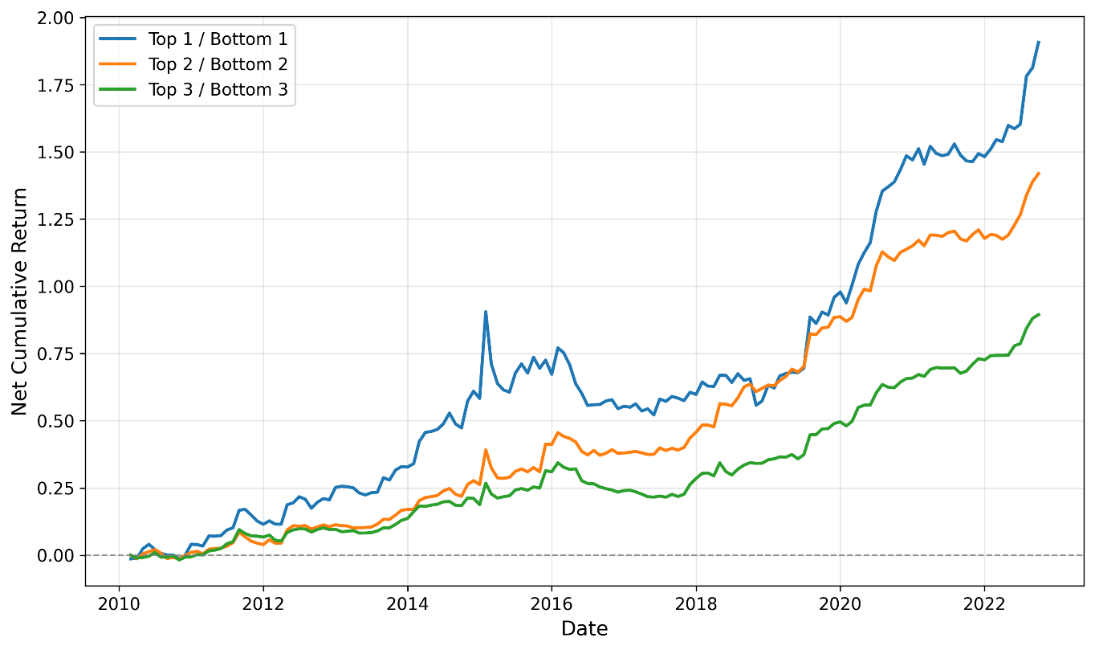
This paper examines whether country-level macroeconomic, valuation, momentum, positioning, volatility, and financial-market signals can predict future monthly exchange rate returns and generate economic value in a long-short currency strategy. This paper constructs monthly returns for 46 currencies and matches them with country-level predictive signals. After stationarity tests and signal transformation, this paper then uses univariate regression models as an initial screening step and builds country-level multivariate forecasting regression models under two model selection approaches: a strict statistical selection method and a category-protected selection method. The selected signals are then used in an expanding-window forecasting framework to construct long-short portfolios. Results show substantial cross-country heterogeneity: no single signal or common signal set consistently predicts all currencies. However, the selected signals can generate meaningful portfolio economic value. Among all the specifications, the Top/Bottom 2 portfolio under the category-protected approach provides the best overall balance between return, volatility, and drawdown. It also outperforms the passive Equal-Weighted FX benchmark and has low correlation with the global equal-weighted local equity benchmark. Overall, the findings suggest that exchange rate predictability should be evaluated not only through regression statistics, but also through portfolio performance, risk control, and diversification value.
Show more
Read Article PDF
Cite
Research Article Open Access
Towards a cashless future: opportunities and challenges for society
In this era where online payments are made more frequently with the help of modern technologies and infrastructure, a cashless society could be foreseen in a few decades. Whether its associated benefits overshadow the challenges has been heated discussed. This article analyzes particular fields based on foundations of current investigation, including crimes, social inequality, privacy issues, monetary policies and market regulatory. The evaluation of net social welfare that a cashless society gives is according to two dimensions: the order of severity and the difficulty of implementing effective solutions. As the investigation goes deeper, it becomes clear that associated issues such as cyber-crimes, financial exclusion and the complexity of redefining central banks' roles and new forms of monetary policy, could be eventually addressed in short run. Nevertheless, the long-run benefits of a cashless society are more long-lasting and imperative in various aspects, which overshadow the overall hazards.
Show more
Read Article PDF
Cite
Research Article Open Access
Can the carbon cap-and-trade and government subsidies drive carbon abatement and mitigate environmental impacts?
Article thumbnail
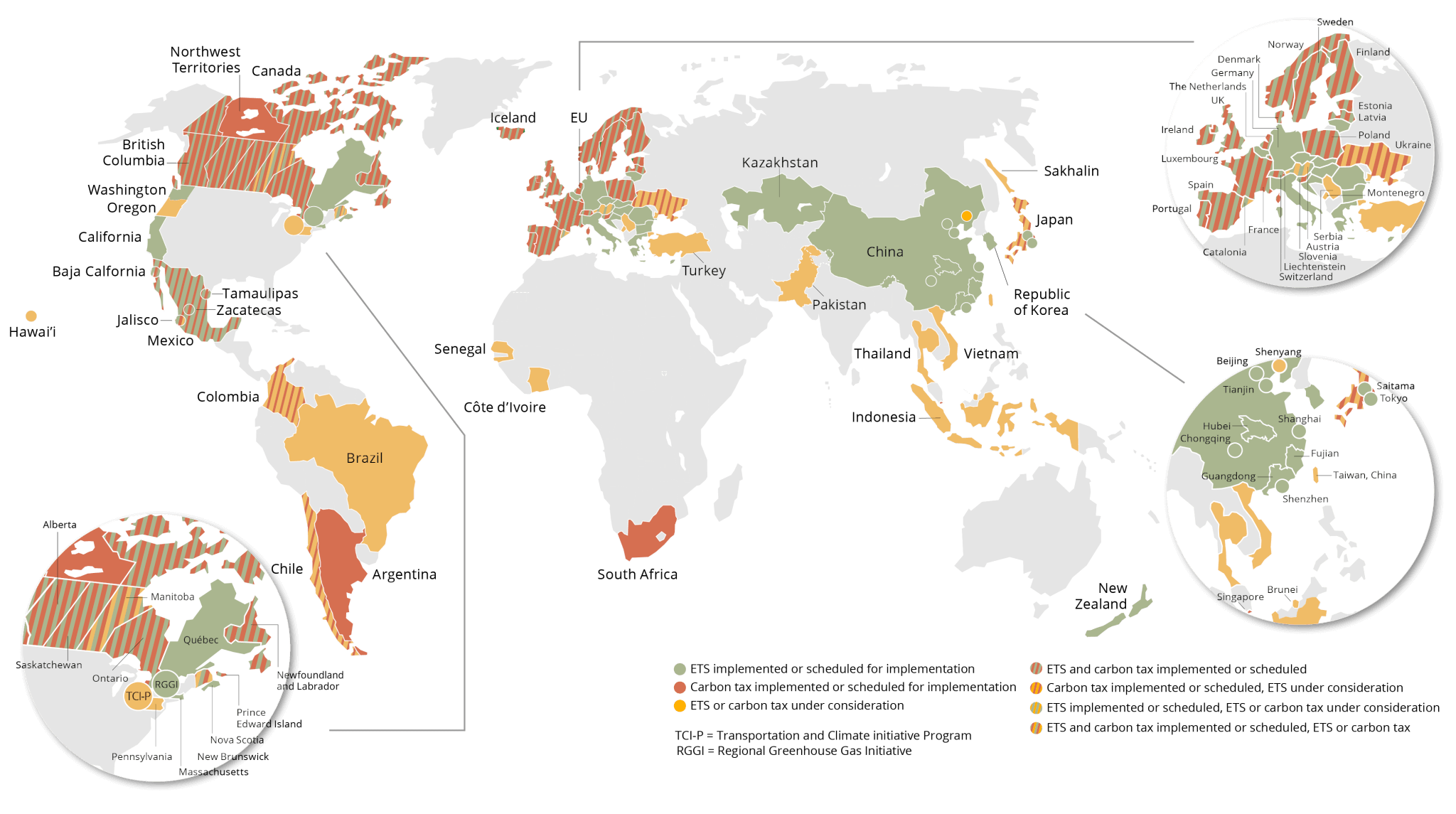
Global governments and industrial enterprises have increasingly prioritized carbon mitigation and ecological conservation, prompting the rollout of diverse regulatory and fiscal tools to drive manufacturing decarbonization. This paper establishes a two-echelon low-carbon supply chain game framework to quantify how distinct policy interventions reshape manufacturers' clean technology investment and emission-cutting behaviors. Core analytical findings are as follows: When consumers exhibit strong green consumption preferences, the carbon cap-and-trade regime delivers maximized profitability for both upstream manufacturers and downstream retailers, alongside superior carbon reduction performance and minimized ecological harm. Nevertheless, fiscal subsidies targeting manufacturers primarily serve profit-maximizing motives rather than robust emission abatement, which implies trading mechanisms may underperform in curbing industrial carbon outputs. Social welfare dynamics hinge on the intensity of public low-carbon demand: emission trading outperforms alternatives once consumer green preference crosses a critical threshold, while manufacturer-specific fiscal incentives yield more favorable aggregate social welfare in most practical scenarios.
Show more
Read Article PDF
Cite