Articles in this Volume

Research Article Open Access
Analysis of consumption in Beijing's milk tea market
This paper focuses on the consumption drivers and barriers of Beijing's new Chinese-style tea market, based on 1,212 valid questionnaire data and statistical methods such as factor analysis and K-means clustering. The results show that the market presents a spindle-shaped competitive structure, and consumers are clustered into four groups: core, follow-up, potential and marginal customers. Core consumers are mainly young students and office workers with high education, pursuing experience and health; follow-up consumers are easily affected by trends. Health concerns, price sensitivity and homogeneous competition are main barriers. This study clarifies consumer behavior characteristics, and puts forward targeted strategies for product innovation, precise marketing and healthy upgrading, providing references for brand operation and market expansion.
Show more
Read Article PDF
Cite
Research Article Open Access
The intrinsic mechanism of Product-Service Systems driving circular industry development: A case study of NIO's Battery-as-a-Service model
Against the backdrop of the accelerating circular industry transition, exploring firms' endogenous driving mechanisms is of critical theoretical and practical importance. This paper examines the Product-Service System (PSS) as a transformative business model, using NIO Automotive's "Battery-as-a-Service" (BaaS) as a case study to investigate how this model drives the full life-cycle circulation of traction batteries. Employing a "Property Rights–Incentives–Behaviour" analytical framework, the study finds that through property rights restructuring, the BaaS model internalises battery assets within the firm, thereby redirecting its core economic incentive toward maximising asset life-cycle value. This incentive subsequently drives the firm to embed circular principles across the design, operation, and end-of-life phases of the battery, enabling it to organically integrate into the traction battery circular industry network. Drawing on 2024 operational data—including over 3,100 battery-swapping stations, 56.61 million cumulative swapping sessions, and battery assets exceeding CNY 20 billion—this paper demonstrates that the BaaS model has generated a substantial asset pool and pronounced network effects. The findings provide a market-driven pathway for aligning business model innovation with circular economy objectives and offer policy implications for the development of circular industrial ecosystems in the new-energy vehicle sector.
Show more
Read Article PDF
Cite
Research Article Open Access
The "Maritime Silk Road" gene and space-air coordination: a path research on the development of new quality productivity in districts driven by low-altitude economy
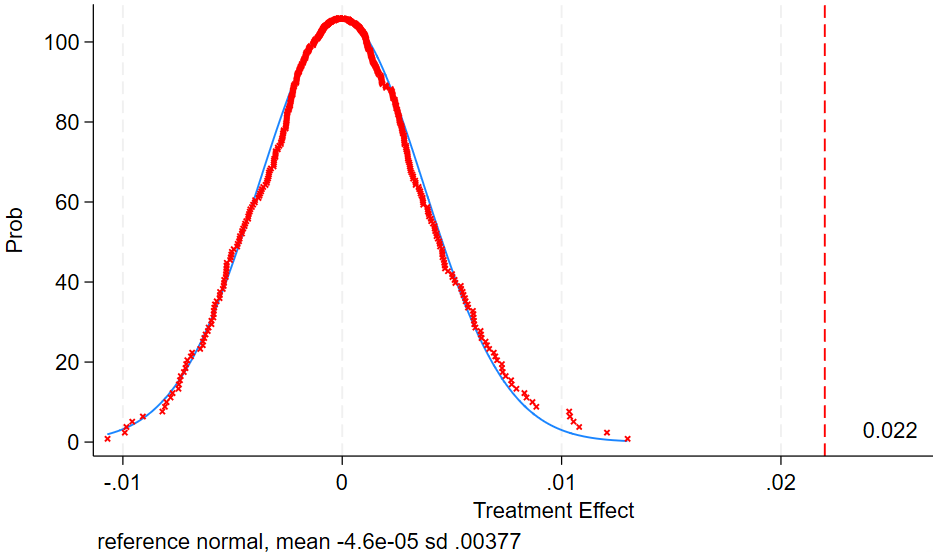
This study comprehensively employs the Spatial Durbin Model (SDM), Double Machine Learning (DML), and Propensity Score Matching–Difference-in-Differences (PSM-DID) models to confirm that Aerospace Technology Synergy (ATS), within the context of the low-altitude economy, exert a significant positive driving effect on new quality productive forces at the county level, while related industrial policies generate substantial net incremental benefits. The findings show that although productive forces currently exhibit spatial agglomeration characteristics, the low-altitude economy remains in an early stage dominated by the "polarization effect". Meanwhile, this driving effect demonstrates marked regional heterogeneity: the technological absorption capacity and driving efficiency of core counties and districts far exceed those of peripheral areas, while the nonlinear threshold moderating effect of Maritime Silk Road cultural resources has yet to emerge. This study provides both theoretical support and policy implications for optimizing the spatial layout of the county-level low-altitude economy.
Show more
Read Article PDF
Cite
Research Article Open Access
Disaster, aid, and crime: a county study in the United States
Based on county-level panel data from 2005-2019, this paper examines the impact of natural disasters (including severe storms, floods, hurricanes, fires, and tornadoes) and subsequent federal assistance on local crime rates. By constructing multiple regression model and controlling for loss per capita, GDP per capita, crime rate in earlier period and fixed effect of year, this paper finds that most disasters do not significantly increase crime rate in the first year, but significantly reduce property crime rate in the second year. Further analysis shows that the overall impact of post-disaster assistance (both personal and public assistance) on crime rates is weak and heterogeneous: some assistance is even slightly positively correlated with crime rates. This study expands the spatiotemporal dimension and disaster types of the relationship between disasters and crime, and provides empirical evidence for post-disaster policy evaluation.
Show more
Read Article PDF
Cite
Research Article Open Access
A study on the key influencing factors and improvement paths of team effectiveness in aerospace enterprises based on SPSS analysis
Teams are the most fundamental organizational units within the scientific research and production system of aerospace enterprises. Strengthening the "cell engineering" of teams is crucial for enterprises to accomplish their reform and development tasks. Taking the framework of "human factors–physical factors–operational factors" as the analytical foundation, this paper identifies six core variables affecting the effectiveness of team development in aerospace enterprises: basic management, objectives and tasks, quality and safety, cost engineering, technological innovation and problem-solving, and team building. Based on SPSS analysis results, improvement paths for enhancing team effectiveness are proposed from six dimensions, providing empirical support for team development practices in aerospace enterprises.
Show more
Read Article PDF
Cite
Research Article Open Access
The impact of China's digital economy development on changes in the labor structure
The digital economy has become a key force reshaping industrial structure and patterns of labor allocation. Against this backdrop, whether the digital economy has accelerated the trends of deindustrialization and servicization in the labor structure has emerged as an important issue requiring urgent clarification. Based on China's provincial panel data from 2013 to 2024, this study systematically examines the impact of the digital economy on changes in the labor structure from two dimensions: digital industrialization and industrial digitalization. The findings are as follows. First, the development of the digital economy generally promotes the servicization and deindustrialization of the labor structure, with the driving effect of industrial digitalization being stronger than that of digital industrialization. Second, the elevation of the "digital economy" to a national strategy in 2017 constituted a critical turning point. Thereafter, digital industrialization shifted toward promoting industrialization and restraining servicization, whereas industrial digitalization continued to strengthen servicization while suppressing industrialization. Third, the heterogeneity analysis shows that the urban digital economy exerts a stronger effect than the rural digital economy in promoting servicization and inhibiting industrialization. In addition, the impact of household-side digital economy applications is significantly greater than that of government and enterprise-side applications.
Show more
Read Article PDF
Cite
Research Article Open Access
A study on the influence of professional competence and professional identity on college graduates' willingness to work in nonprofit organizations
Article thumbnail
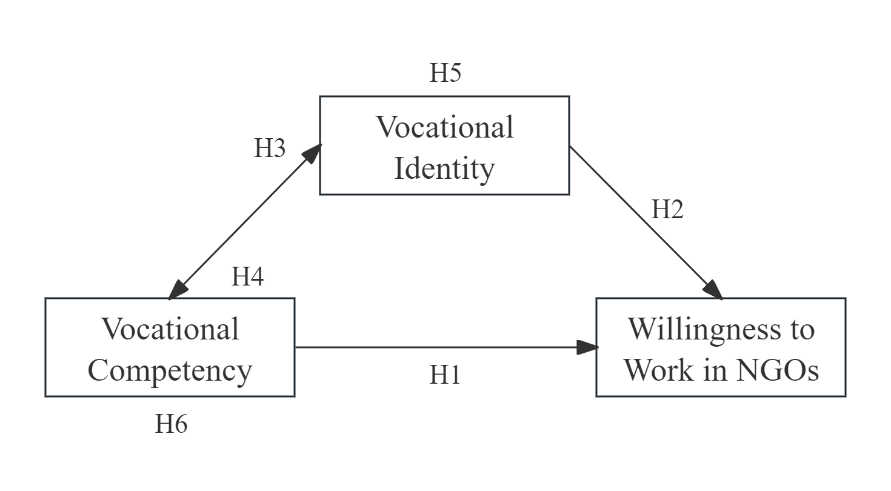
Objective: This study examines the influence of professional competence and professional identity on college graduates' willingness to work in nonprofit organizations, as well as the underlying mechanisms of such influence, in order to provide a reference for alleviating the human resource difficulties faced by nonprofit organizations. Methods: A model of college graduates' willingness to work in nonprofit organizations was constructed. Using questionnaire surveys, this study analyzed undergraduate students' professional competence, professional identity, and willingness to work in nonprofit organizations, and explored the key factors and pathways influencing their willingness to enter the nonprofit sector. Results: Both professional competence and professional identity exerted significant positive effects on college graduates' willingness to work in nonprofit organizations. In addition, professional competence played a mediating role between professional identity and willingness to work in nonprofit organizations. Conclusion: Nonprofit organizations and universities should work together to enhance college graduates' professional competence and strengthen their professional identity toward nonprofit work, thereby increasing their willingness to pursue careers in the nonprofit sector.
Show more
Read Article PDF
Cite