Articles in this Volume

Research Article Open Access
Study on the development differences and optimization paths of urban and rural elderly canteens in China: taking Jinyun County, Zhejiang Province and Songjiang District, Shanghai as examples
This study addresses the supply-demand mismatch in elderly meal assistance services, with a specific focus on the operational challenges within mountainous counties, using a cross-regional comparative analysis of Jinyun County in Zhejiang (a basic guarantee model) and Songyang District in Shanghai (a quality-oriented benchmark). A mixed-methods approach combining qualitative and quantitative analysis was employed, grounded in fieldwork and data collection including site visits to 20 elderly canteens, 76 menu samples, 238 price data points, 15 operational observations, and verification of financial documents. This was supplemented by analysis of 18 policy texts and official data from 2021-2023 within an analytical framework of “policy design – practical implementation – service efficiency.” The findings reveal significant regional differences in service layout, financing, and refinement. Jinyun County exhibits a “small and scattered” model constrained by terrain, whereas Songjiang District utilizes a “central kitchen + distribution point” approach characterized by high social participation, universal aging-friendly modifications, and intelligent supervision. Based on these empirical results, the study proposes optimization pathways such as establishing county-wide coordinated service networks, diversifying operational mechanisms, promoting digital technology adoption, and strengthening standardization, thereby offering actionable strategies to enhance service quality and efficiency in mountainous regions.
Show more
Read Article PDF
Cite
Research Article Open Access
Lessons from the Silicon Valley Bank crisis for the supervision of China's financial institutions for banks
The Silicon Valley Bank (SVB) crisis not only triggered fear in the financial market at that time but also led to a series of chain reactions—such as deposit outflows from other banks, which further heightened their risk of failure. Therefore, it is crucial for China to optimize its financial institution supervision system to reduce the risks in the financial market. Based on the literature measurement and case anatomy, this paper analyzes the implications of the Silicon Valley banking crisis for the banking supervision of Chinese financial institutions. Specifically, the authors analyze the direct and indirect causes of the banking crisis in Silicon Valley, and from a regulatory perspective, put forward insights for the banking supervision of Chinese financial institutions. Based on this crisis, the enlightenments for Chinese finance are empowerment in regulation with technology, strengthening the current system by including medium-sized banks in the dynamic assessment of the liquidity coverage ratio, and promoting international collaborative governance.
Show more
Read Article PDF
Cite
Research Article Open Access
Analysis of investment risks in China's tire industry
Article thumbnail
In recent years, the tire industry has faced a significant increase in trade barriers in the international market, and the situation of overcapacity in the domestic market has continued to deteriorate. China's tire industry has been under continuous pressure amid the dilemma of "revenue growth without corresponding profit increase". This paper elaborates on three aspects: an analysis of the current situation and a brief account of the causes of China's tire industry, an analysis of the risks faced by China's tire industry, and research conclusions and future trends of China's tire industry. The types of investment risks in China's tire sector are complex. The uncertainty caused by fluctuations in raw material prices: core raw materials such as rubber and carbon black are affected by multiple factors including global supply and demand, natural conditions, trade policies, and international situations, leading to significant price fluctuations. This has significantly increased production costs and eroded corporate profitability. Market competition is extremely fierce: overseas brands dominate the high-priced market, while local enterprises concentrate on competition in the mid-to-low-end sector. New entrants face challenges such as difficulties in market development and low brand recognition. Price competition and technological competition within the industry have further intensified market pressure. Although technological upgrading is the core driving force for progress, it involves high R&D costs, long cycles, and uncertain results. The industrialization of innovative technologies also needs to address challenges such as insufficient market recognition. If enterprises respond slowly, they may lose development opportunities or even be eliminated by the market. In addition, with the improvement of global environmental protection requirements and the strengthening of supervision, the environmental protection expenditures of tire manufacturers have increased accordingly, further compressing profit margins. Failure to adapt to regulatory adjustments in a timely manner may result in severe consequences such as penalties or production restrictions. When investing in this sector, investors need to comprehensively assess the above risks, formulate response plans, continuously pay attention to industrial trends and market dynamics, and dynamically optimize operational strategies.
Show more
Read Article PDF
Cite
Research Article Open Access
Can national independent innovation demonstration zones enhance manufacturing supply chain resilience?— evidence from Chinese A-share listed manufacturing companies
Article thumbnail
Studying the resilience of manufacturing enterprise supply chains helps enhance firms’ ability to cope with external shocks and uncertainties, thereby safeguarding national economic security and promoting the sustainable development of the manufacturing sector. This study focuses on Chinese A-share listed manufacturing companies from 2011 to 2023 and employs a multi-period difference-in-differences (DID) approach to examine the impact of the National Independent Innovation Demonstration Zone (NIIDZ) policy pilot on the supply chain resilience of manufacturing listed companies. The results indicate that the NIIDZ policy pilot significantly improves manufacturing supply chain resilience, and this enhancement is primarily achieved by promoting enterprise adoption of artificial intelligence and accelerating digital transformation. Further heterogeneity analysis reveals that the policy has a significant positive effect on technology-intensive and non-polluting enterprises. These findings suggest that the NIIDZ policy plays an active role in strengthening manufacturing supply chain resilience and provide important policy implications for the government in promoting digitalization and enhancing the risk-resistance capacity of manufacturing supply chains.
Show more
Read Article PDF
Cite
Research Article Open Access
Building trust or fueling uncertainty: the effects of information clarity and ambiguity on sustainable fashion decisions
Article thumbnail
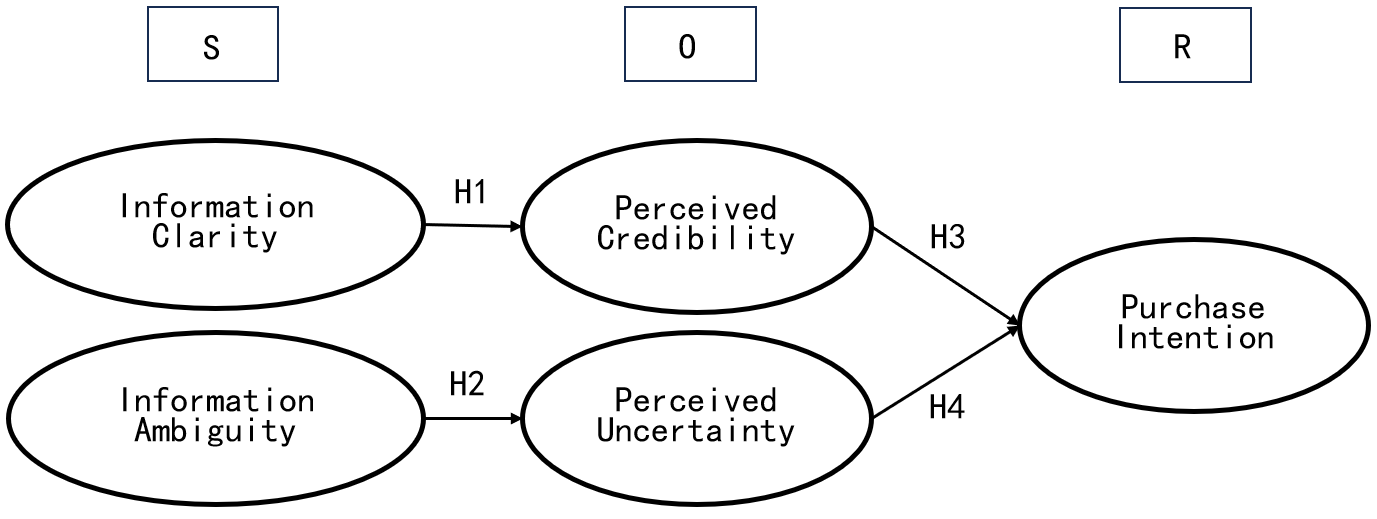
Amidst escalating environmental concerns within the fashion industry, a prevalent "attitude-behavior gap" exists among consumers, where pro-environmental attitudes often fail to translate into actual purchasing behavior. This discrepancy is closely linked to ambiguous and often misleading communication strategies employed by brands. To investigate this phenomenon, the present study draws upon the Stimulus-Organism-Response (S-O-R) framework to develop a theoretical model that elucidates the influence of brand information presentation on consumer purchase intention. The empirical analysis reveals that information clarity significantly enhances perceived credibility, which in turn positively influences purchase intention. Conversely, information ambiguity heightens perceived uncertainty, subsequently suppressing purchase intention. These findings suggest that establishing consumer trust through clear and transparent communication is a critical mechanism for bridging the consumer attitude-behavior gap and effectively fostering sustainable consumption.
Show more
Read Article PDF
Cite
Research Article Open Access
From family capital to social mobility: educational choices and challenges of second-tier city students studying abroad
This study examines the role of family capital in shaping overseas educational mobility within the context of second-tier cities. Using Y High School in Hefei as a case study, it compares the strategies adopted and challenges faced by families of different income levels in supporting their children's overseas education, and offers relevant recommendations. This research, based on Bourdieu's theory of capital, employs a qualitative approach through in-depth interviews. The results show that high-income families leverage their comprehensive advantages in economy, culture, and social capital to connect with global education resources; while middle- and low-income families prefer a path with manageable costs and higher expected returns, which could cause loss of opportunities for students and even result in psychological pressure. Meanwhile, failing to reach the expectation of studying abroad, such as gaining advantages in the job market and social recognition, indicates that the conversion and flow of capital are not necessarily upward. This study proposes to establish a public information platform for international education, improve the national and local scholarship systems for studying abroad, integrate public school curricula with international programs and other suggestions. It encourages families and students themselves to make decisions about studying abroad with a positive mindset and calls for enterprises and society to enhance recognition towards overseas study, thereby promoting education equality and capital flow.
Show more
Read Article PDF
Cite
Research Article Open Access
From rational minds to herding hearts: the impact of stock performance transparency on risk preference
Article thumbnail
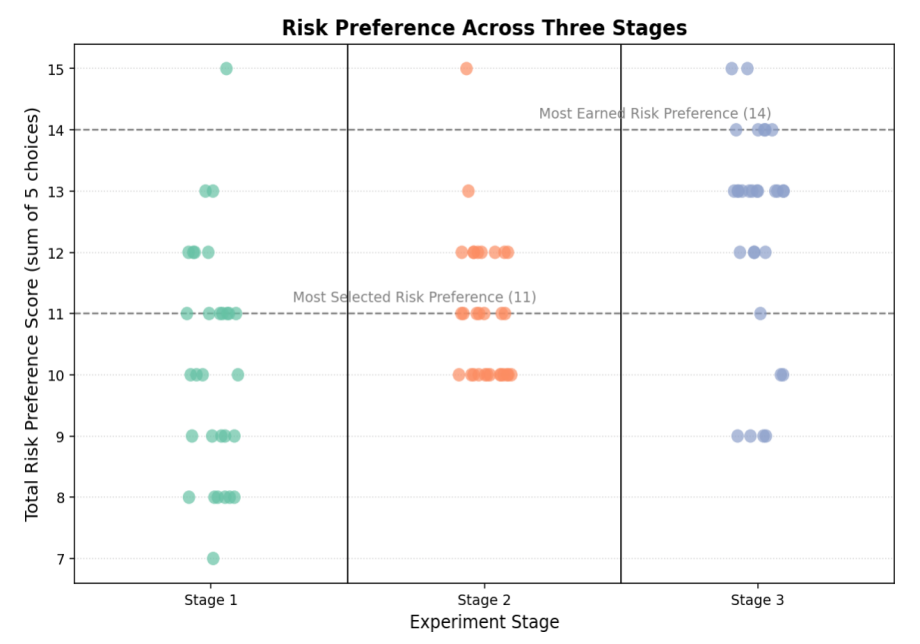
This research examines how performance transparency affects individual sideways shifting of risk preferences within rational assessment and herding frameworks. In three conditions (no disclosure, peer choice visibility, and peer earnings visibility), participants in some control experiments took turns making investment decisions under the three conditions as described. The hypothesis was confirmed, whereby the disclosure of choices and the earnings report in some scenario played a part in determining transparency in relation to conformity and complete rational reassessment. Diversification of behavior manifested in fully rational reassessment and rational diversification of behavior. Different stages of the experiments reflected changes in the risk tolerance in a statistically significant way, and the risk disclosure was the most powerful mechanism to effect change. Individual risk tolerance was the strongest determinant of the extent of imitation, herding behavior in risk-averse participants, while risk-seeking behavior was associated with autonomy. Recurrent feedback responses, cascades, and their reversal refine the Informational Cascade Theory. The junction of reference-dependent framing and transparency adds to Prospect Theory. Analytical reasoning, social influence, and Rational Thinking Theory coincide as social influence was shown to be mitigated by rational thinking. In general, performance transparency is a double-edged sword; with context and framing around the risk, it can trigger imitation or rational independence.
Show more
Read Article PDF
Cite
Research Article Open Access
The significant impact of artificial intelligence on asset pricing
This paper primarily discusses the development of asset pricing theory, tracing its evolution from Markowitz’s Portfolio Theory and the Capital Asset Pricing Model (CAPM) to multi-factor models. It highlights that traditional models, due to their simplifying assumptions and limited computational capacity, struggle to cope with highly dynamic and nonlinear real-world markets, particularly in the context of major event shocks, the utilization of unstructured information, and complex investor behavior. Building on this, the paper focuses on the transformative impact of artificial intelligence (AI) technologies, such as machine learning and natural language processing, on asset pricing. AI enhances forecasting accuracy, enables real-time responses to market changes, and extracts insights from multi-source unstructured data, thereby significantly improving pricing efficiency and risk management capabilities. Finally, the paper emphasizes the need for continuous advancement in areas such as algorithm optimization, data quality, regulatory compliance, and human–machine collaboration to achieve more effective applications of AI in asset pricing.
Show more
Read Article PDF
Cite
Research Article Open Access
Research on the pathways and spatial support mechanisms for industry–innovation integration across upstream, midstream and downstream of the intelligent connected vehicle industry in urban agglomerations—a case study of Tesla (Shanghai)
Article thumbnail
The intelligent connected vehicle (ICV) industry is the core arena for the integration of the “automotive industry + digital technologies,” and the integration of industry and innovation is key to enhancing the sector’s competitiveness. Taking Tesla (Shanghai) as the study sample, this paper investigates the pathways of industry–innovation integration in the ICV sector within an urban agglomeration and the spatial support mechanisms that enable it. The study finds that Tesla (Shanghai) achieves industry–innovation integration through the following pathways: (1) staged transformation of R&D focus; (2) upstream firms building R&D bases to strengthen their autonomous core-technology capabilities; (3) construction of localized, vertically integrated supply-chain networks; and (4) realizing industry–innovation coordination through diversified collaboration and standards alignment, thereby expanding brand influence and generating network effects. The paper concludes that Tesla (Shanghai), by establishing the Shanghai Gigafactory as a spatial carrier, has formed a hierarchical distribution of supply chains and a pattern of regional division of labor across “Shanghai—the urban agglomeration—the nation,” and has made full use of the multidimensional support mechanisms such as preferential policies in the Lingang New Area to drive industry–innovation integration. Finally, the paper offers policy, corporate, and spatial-level lessons for urban agglomerations aiming to develop ICV industry clusters.
Show more
Read Article PDF
Cite
Research Article Open Access
An event study on the valuation of Olympic sponsorships: empirical evidence from Toyota, Panasonic, and Bridgestone
Article thumbnail
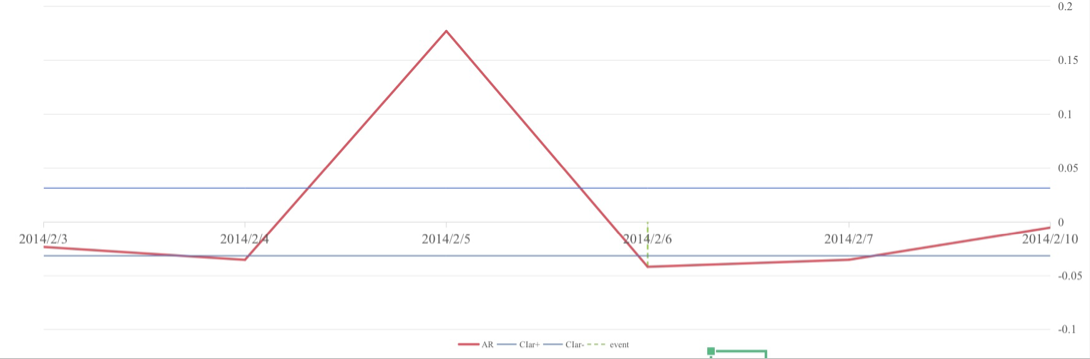
This study examines the stock market reactions to the announcements by three major Japanese TOP sponsors—Toyota, Panasonic, and Bridgestone—not to renew their partnerships after the Paris 2024 Olympics. Using event study methodology with CAPM-based estimation of abnormal returns, we find no consistent statistically significant market responses to these exit decisions. The results suggest investor skepticism regarding the financial returns of high-cost Olympic sponsorships and reflect broader corporate reassessment of their value in an era of economic and reputational uncertainties. By analyzing sponsorship withdrawal as a strategic event, this research extends the literature on the sponsorship lifecycle and provides relevant insights for both firms and the IOC in re-evaluating long-term partnership strategies.
Show more
Read Article PDF
Cite