Articles in this Volume

Research Article Open Access
The development of Sanya golf study tour products based on the RMP-SWOT theory
Article thumbnail
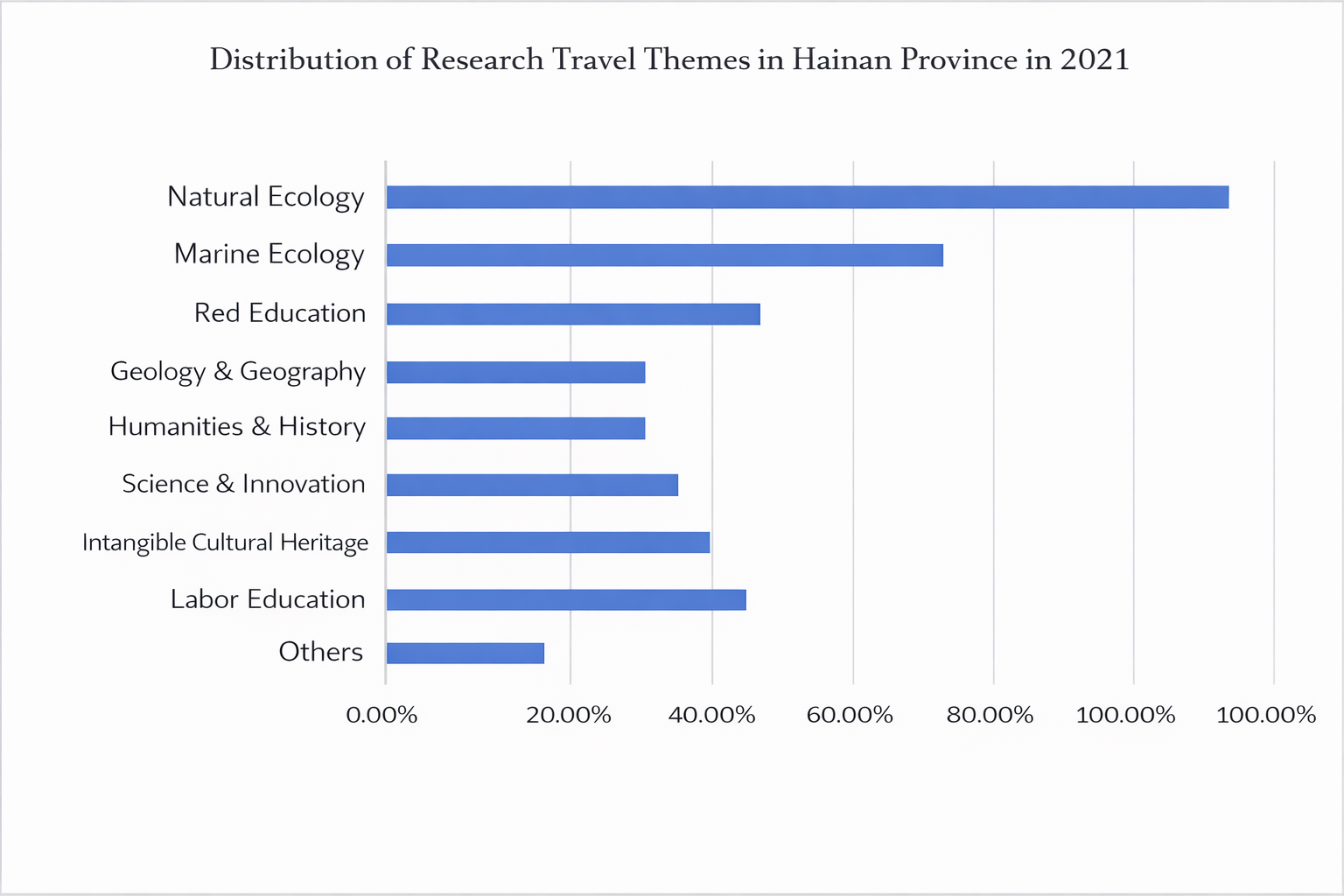
Against the backdrop of the integration of study tours and quality-oriented education, Sanya has emerged as a key region for promoting the development of golf study tours, leveraging its favorable climate, industry foundation, and tourism resources. This study positions policy support as the core driver and employs literature review, field investigation, and the RMP-SWOT framework to explore strategies for developing golf study tour products in Sanya. While policy guidance has accelerated the growth of golf study tours, challenges remain, including product homogenization, weak course systems, and insufficient teaching staff. The RMP-SWOT analysis reveals that Sanya’s advantages include suitable climate, high-quality golf facilities, and abundant tourism resources, whereas weaknesses lie in limited market awareness, inadequate supporting services, and homogeneous competition. Opportunities stem from policy incentives and rising consumer demand, while threats arise from macroeconomic fluctuations and regional competition. Targeted development strategies are proposed: establish a tiered course system offering “skills + literacy” courses for youth and “sports + leisure” products for parent-child groups; create a school-enterprise cooperative teacher training and certification system to address staffing gaps; adopt an “online precision marketing + offline experiential engagement” model, leveraging Sanya’s tourism IP to enhance brand influence. Sanya should orient itself toward “sports education,” optimize training systems, modular course design, and integrated marketing to significantly enhance product competitiveness. This will facilitate the effective translation of policy advantages into implementation, integrate resources to drive product iteration, and form a distinctive industry framework. Future research could focus on intelligent courses, sustainable development, and cross-regional collaboration to support industry standardization.
Show more
Read Article PDF
Cite
Research Article Open Access
How multinational enterprises respond to the global minimum tax
Article thumbnail
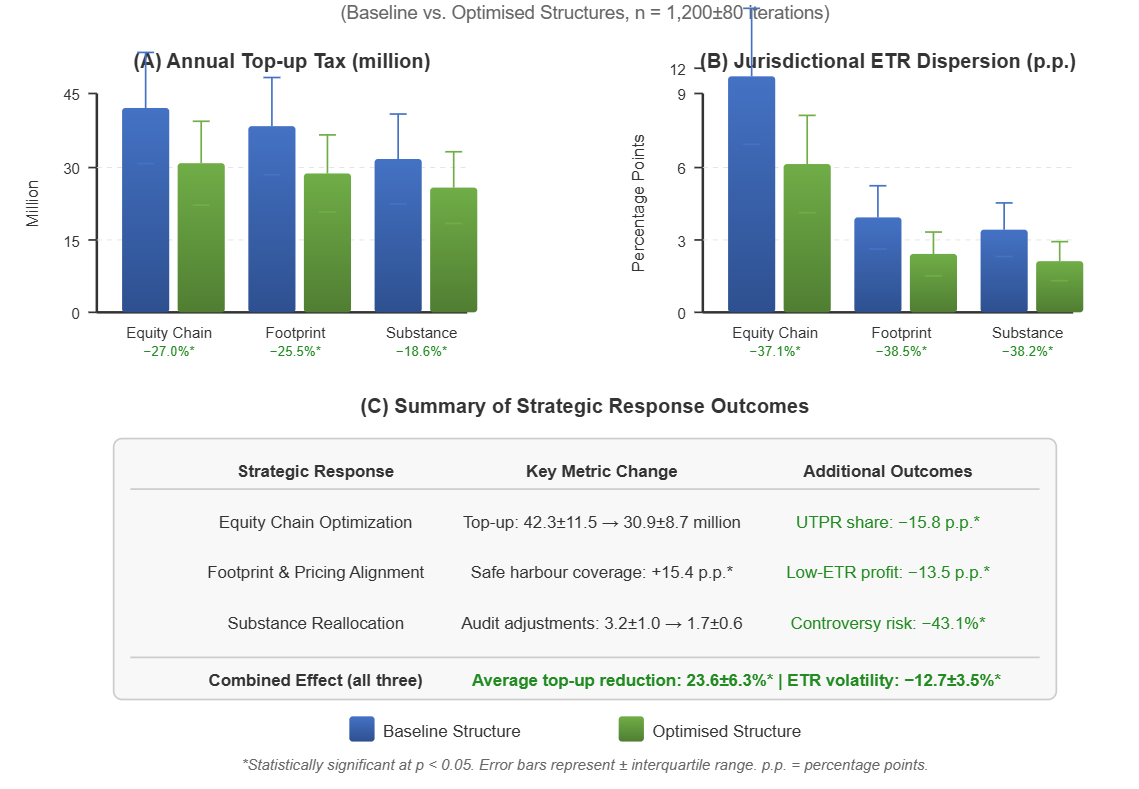
This paper develops an operating blueprint for multinational enterprises facing the 15% global minimum tax under Pillar Two. It combines structured analysis of implementation status, Qualified Domestic Minimum Top-up Taxes (QDMTTs), and safe harbours with quantitative assessment of strategic responses across equity chains, business footprint, and substance. A comparative mapping of 48 ± 3 jurisdictions and 72 ± 5 multinational groups shows that by 2026, more than 31.5 ± 4.7 jurisdictions will have implemented some form of Pillar Two, with 19.2 ± 2.9 offering QDMTTs that can offset top-up exposure. Scenario modelling indicates that effective use of transitional country-by-country reporting safe harbours can reduce full GloBE computations from 17.8 ± 5.2 to 6.4 ± 2.1 jurisdictions per group in early years, while coherent QDMTT design and substance reallocation can lower average top-up tax by 23.6 ± 6.3%. The paper proposes a four-dimensional response framework that stabilizes jurisdictional effective tax rates, compresses UTPR exposure, and reduces volatility in quarterly tax charge by 12.7 ± 3.5% in modelled cases. The analysis concludes that Pillar Two should be treated as a multi-year operating programme with tax, finance, and IT jointly accountable for data quality, safe harbour coverage, and strategic alignment.
Show more
Read Article PDF
Cite
Research Article Open Access
A risk-constrained distributional reinforcement learning portfolio strategy integrating chain-of-thought logical priors and time-varying topological structures
Article thumbnail
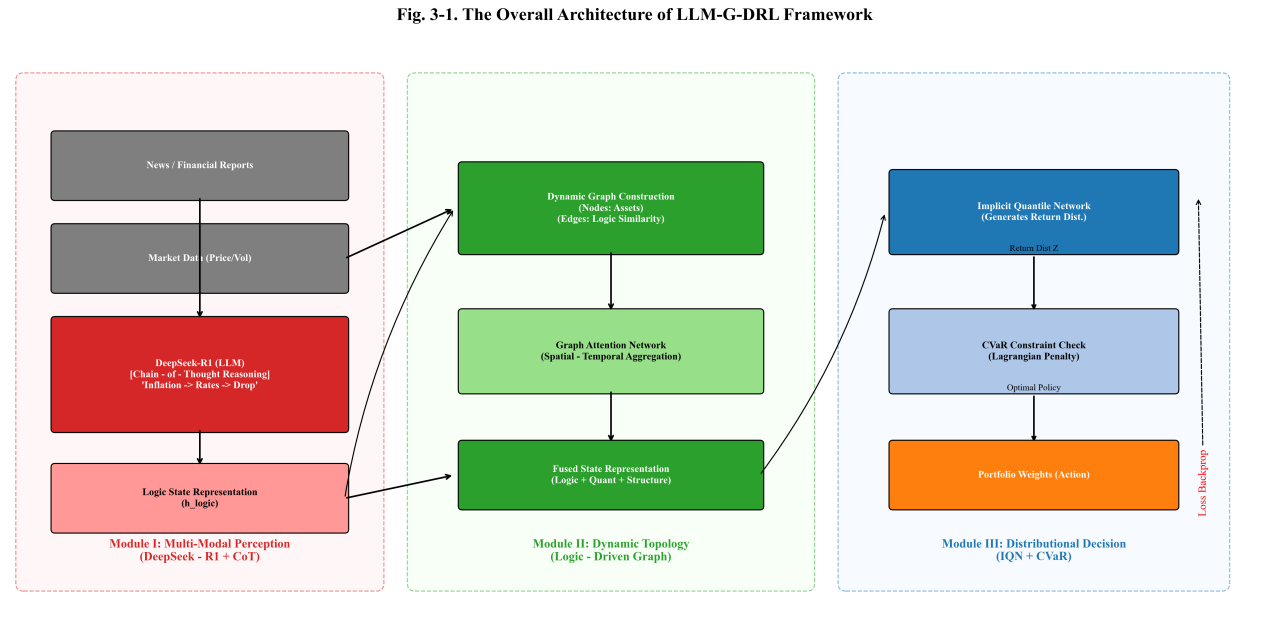
Time series of financial asset returns typically exhibit pronounced non-ergodicity and heavy-tailed, spiky distributions. Traditional mean–variance models and expectation-based Deep Reinforcement Learning (DRL) approaches struggle to effectively capture distributional shifts induced by exogenous logical shocks. To address this challenge, this paper proposes a risk-constrained distributional reinforcement learning framework that integrates large language model–based logical reasoning with dynamic graph dependencies (LLM-G-DRL). At the perception level, rather than relying on conventional sentiment polarity classification, this study introduces large language models that support Chain-of-Thought (CoT) reasoning (e.g., DeepSeek-R1) to construct a Bayesian logical belief updating mechanism. This mechanism maps unstructured financial texts into high-dimensional latent logical states embedding causal transmission paths, thereby correcting predictive biases arising from exclusive dependence on historical price and volume data. At the structural level, to characterize the nonlinear contagion of systemic risk, the framework abandons the assumption of static adjacency matrices and employs dynamic graph attention networks (Dynamic GAT) to reconstruct time-varying topological dependencies among assets, enabling explicit modeling of risk propagation channels. At the decision-making level, the portfolio optimization problem is formulated as a Constrained Markov Decision Process (CMDP). Implicit Quantile Networks (IQN) are adopted to approximate the full probability distribution function while preserving higher-order moment information. Furthermore, based on Lagrangian duality theory, a hard constraint on Conditional Value at Risk (CVaR) is introduced, transforming tail-risk control into a dynamic penalty mechanism governed by dual variables. Theoretical analysis demonstrates that, through a closed-loop design combining “logical priors, structural contagion, and distributional decision-making,” the proposed framework exhibits stronger mathematical robustness than traditional point-estimation models. It effectively identifies and avoids tail losses under extreme market conditions, offering a statistically interpretable new paradigm for intelligent asset allocation in non-stationary markets.
Show more
Read Article PDF
Cite
Research Article Open Access
The impact of circadian rhythms on impulse buying behavior and return rates in livestream e-commerce
Article thumbnail
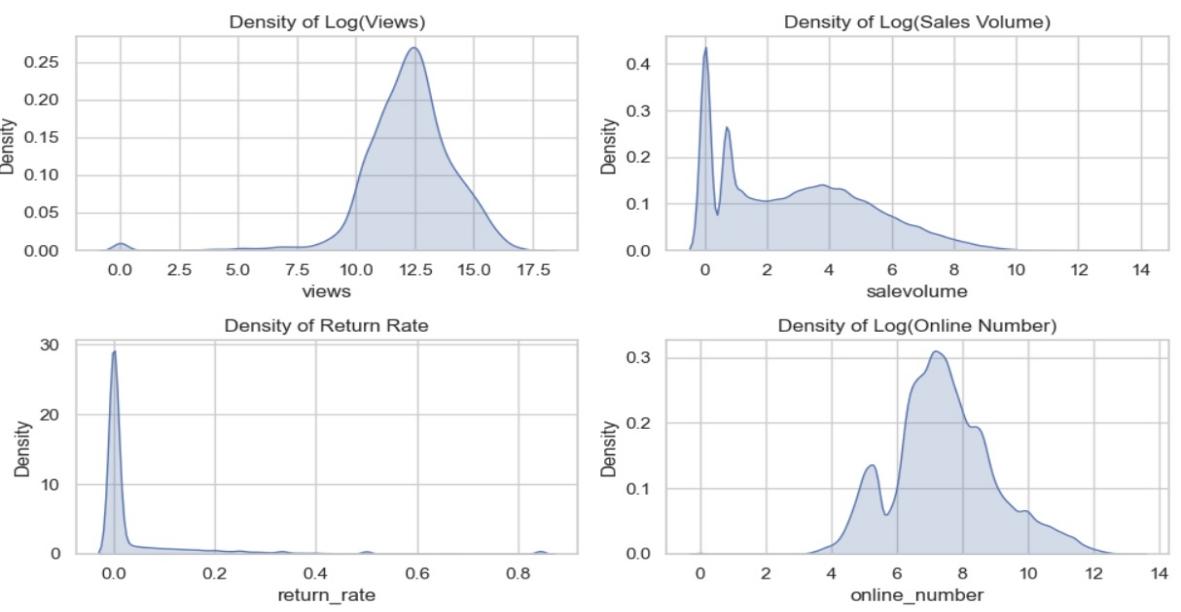
Livestream e-commerce enables continuous consumer engagement across the day, yet the role of time-of-day in shaping consumer behavior remains underexplored. This study examines whether shopping during nighttime hours is associated with differences in impulsive engagement, post-purchase outcomes, and consumer retention. Using 982,746 session-level observations from Douyin livestream commerce, we compare consumer behavior during a daytime alertness window (10:00–18:00) and a nighttime low-alertness window (22:00–06:00). Descriptive analyses, Welch’s t-tests, and multivariate regression models are employed to evaluate circadian differences across engagement, sales, return behavior, and retention-related measures. Results show that nighttime livestream sessions generate significantly higher impulsive engagement and sales volume but are associated with lower retention and engagement stability. In contrast, return rates do not increase meaningfully for nighttime purchases once economic and contextual controls are introduced, indicating that heightened impulsivity does not translate into higher regret-driven returns. These findings suggest that time-of-day systematically shapes both short-term commercial performance and longer-term engagement outcomes in livestream commerce. By introducing circadian timing as an explanatory dimension, this study extends applied economic analyses of digital markets and offers implications for platform strategy, performance evaluation, and time-sensitive policy considerations in 24-hour online retail environments.
Show more
Read Article PDF
Cite